What Makes a Prestige Cosmetics Company Worth Your Money?
A prestige cosmetics company is a beauty brand that commands premium pricing through luxury positioning, selective distribution, high-quality formulations, and aspirational branding. Companies like Estée Lauder, Lancôme, Chanel Beauty, and Tom Ford fall into this category, selling primarily through department stores, specialty beauty retailers like Sephora and Ulta, and their own boutiques rather than drugstores or mass retailers.
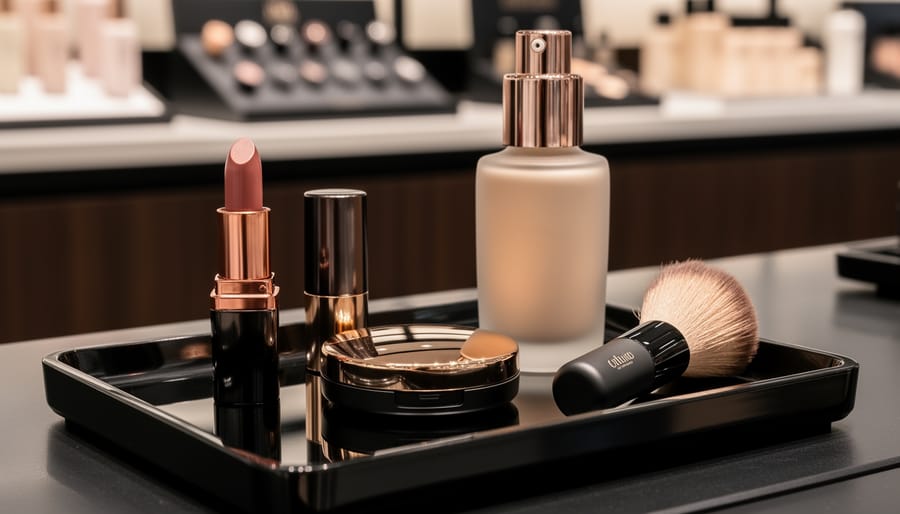
What separates prestige from mass-market isn’t always ingredient quality (though it can be), but rather the complete experience: sleek packaging, sophisticated marketing, exclusive launches, personalized counter service, and the intangible allure of owning something special. These companies invest heavily in research and development, celebrity partnerships, and creating that covetable factor that makes you feel like you’re treating yourself every time you reach for that lipstick.
The prestige beauty market has grown substantially, with major conglomerates like LVMH, Estée Lauder Companies, L’Oréal Luxe, and Shiseido dominating the landscape. Each operates multiple prestige brands under one corporate umbrella, from heritage names with decades of history to buzzy newcomer labels acquired specifically to capture younger, trend-savvy consumers.
But here’s the question keeping many of us up at night: do prestige cosmetics actually justify their price tags, or are we paying for pretty packaging and a fancy name? The truth sits somewhere in the middle. Some prestige products deliver genuinely superior performance, innovative formulas, and longevity that cheaper alternatives can’t match. Others? You’re mostly funding the marketing budget and counter space at Nordstrom.
Understanding what makes a cosmetics company “prestige” and which players lead this space helps you make smarter choices about where to splurge and where to save.
What Actually Defines a Prestige Cosmetics Company
A prestige cosmetics company operates in a completely different world than the brands you’ll find at your local drugstore, and understanding these distinctions helps you decide where your money really belongs.
Price tags tell the first part of the story. Prestige brands typically price their foundations between $40 and $80, lipsticks around $25 to $50, and skincare products often climb well over $100. Mass-market brands rarely break the $20 mark for comparable items. But here’s what matters: that price gap reflects genuine differences in how these companies operate, not just fancy packaging.
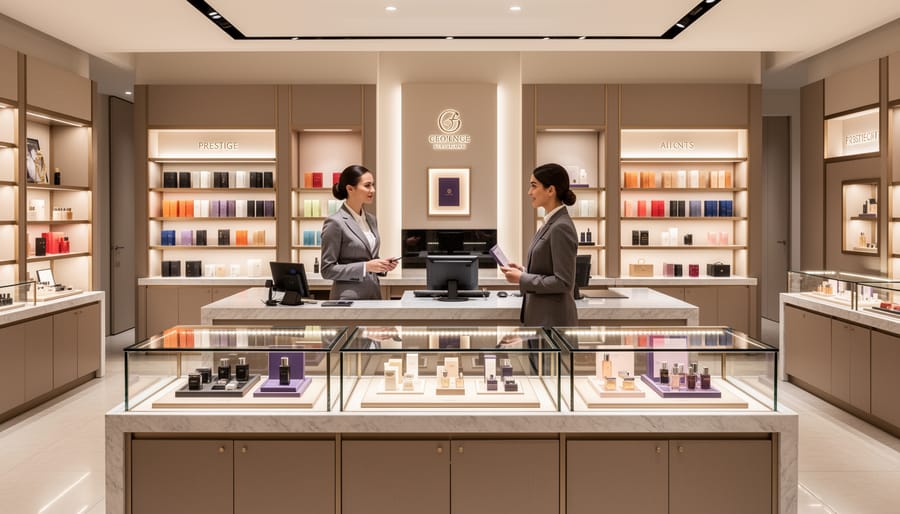
Distribution creates exclusivity that defines the prestige tier. These companies choose their retail partners carefully. You’ll find prestige cosmetics at Sephora, Ulta’s prestige sections, department store beauty counters, and specialty boutiques, not at Target or Walmart. This selective placement allows trained beauty advisors to provide consultations and creates a shopping experience that feels elevated. The brands maintain tighter control over how their products are presented and sold.
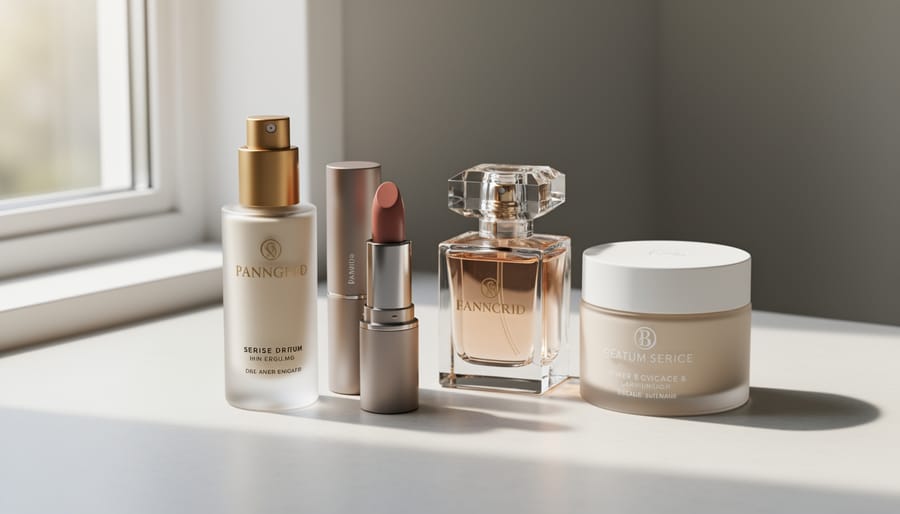
Packaging serves as a company’s calling card. Prestige brands invest heavily in glass compacts, weighted bottles, magnetic closures, and sleek designs that photograph beautifully and feel luxurious in your hand. This isn’t purely vanity. Quality packaging protects formulations better and signals the level of attention paid to every detail.
Formulation quality separates serious players from pretenders. Prestige companies typically invest more in research and development, often formulating with higher concentrations of active ingredients, proprietary technologies, and premium raw materials. Many maintain their own labs and conduct clinical testing. They’re also more likely to exclude controversial ingredients and meet stricter safety standards than required by law.
Brand heritage and positioning complete the picture. Prestige cosmetics companies build narratives around expertise, artistry, and innovation. Some trace their lineage back decades, leveraging founder stories and makeup artist credibility. Others position themselves as cutting-edge laboratories solving specific skin concerns. This positioning isn’t just marketing fluff when it’s backed by genuine investment in product development and a consistent commitment to quality across their entire range.
The premium price funds this ecosystem: better ingredients, more rigorous testing, exclusive retail partnerships, and innovations that eventually trickle down to mass-market brands.
The Major Players You Should Know About
The prestige cosmetics world is controlled by a handful of powerhouse companies you’ve definitely encountered, even if you didn’t realize they’re all connected. Understanding who owns what helps you make smarter choices about where your money goes and what you’re actually supporting when you buy that gorgeous lipstick.
Estée Lauder Companies dominates the landscape with a portfolio that touches nearly every prestige beauty counter. This company owns Estée Lauder, MAC, Clinique, Bobbi Brown, La Mer, Tom Ford Beauty, and over twenty other brands. Their genius lies in owning brands at different prestige tiers, from accessible luxury like Clinique to ultra-premium like La Mer, so they capture customers across income levels while maintaining that coveted prestige positioning. What sets them apart is their knack for acquiring indie brands that resonate with younger shoppers (think Too Faced and BECCA before they discontinued it) and their massive investment in counter staff training.
L’Oréal Luxe might surprise you because L’Oréal also makes drugstore staples, but their luxury division operates completely separately. They own Lancôme, YSL Beauty, Giorgio Armani Beauty, Urban Decay, and Kiehl’s among others. L’Oréal’s strength is leveraging their massive research budget across all tiers, meaning their prestige brands genuinely benefit from cutting-edge innovation. They’re particularly strong in skincare science and have been pioneers in personalized foundation technology.
| Company | Flagship Brands | Price Positioning | Signature Strength |
|---|---|---|---|
| Estée Lauder Companies | Estée Lauder, MAC, La Mer, Tom Ford | Mid to ultra-premium | Counter experience, multi-tier portfolio |
| L’Oréal Luxe | Lancôme, YSL Beauty, Urban Decay | Mid to high prestige | Scientific innovation, research investment |
| LVMH | Dior, Givenchy, Fenty Beauty, Guerlain | High to ultra-luxury | Fashion house heritage, cultural influence |
| Shiseido | Shiseido, NARS, Clé de Peau Beauté | Mid to ultra-premium | Asian beauty expertise, texture innovation |
LVMH brings fashion house credibility to beauty. Their portfolio includes Dior, Givenchy, Fenty Beauty, and Guerlain. What makes LVMH distinctive is their connection to haute couture, these brands come with decades (sometimes centuries) of luxury heritage. When you buy Dior makeup, you’re tapping into that runway glamour and French sophistication. They excel at creating aspirational experiences and limited editions that feel genuinely special.
Shiseido represents Japanese beauty innovation at its finest. Beyond their namesake brand, they own NARS, Clé de Peau Beauté, and bareMinerals. Shiseido’s superpower is texture, their formulations feel luxurious in ways Western brands often miss. They’ve mastered lightweight, skin-like finishes and pioneered technologies around UV protection and anti-aging that other companies later adopted.
These four companies control most of what you see at Sephora, Ulta’s prestige section, and department store beauty counters. Recognizing their distinct approaches helps you understand why a NARS blush feels different from a MAC one, or why La Mer commands sky-high prices while Clinique stays accessible. You’re not just buying a product, you’re buying into each company’s specific expertise and positioning strategy.
Prestige vs. Mass-Market: Where Your Money Actually Goes
Let’s talk about where that extra cash actually goes when you choose a prestige product over its drugstore counterpart.
The most significant difference sits in the formulation lab. Prestige companies typically invest heavily in research and development, dedicating years to testing new active ingredients, stability studies, and clinical trials. That doesn’t automatically mean every prestige foundation outperforms every mass-market option, but it does mean you’re more likely to encounter cutting-edge ingredients and innovative delivery systems. Companies like Estée Lauder and L’Oréal Luxe spend millions annually on proprietary technologies and patents. Mass-market brands work with tighter margins and faster development cycles, which can limit experimentation.
Packaging represents another visible cost difference. That weighty glass compact or magnetized closure isn’t just aesthetic; it’s part of the luxury experience prestige companies sell. Mass-market brands prioritize functionality and cost-efficiency, often using lighter plastics and simpler closures. Neither approach makes the product inside better or worse, but it does affect the experience and the price tag.
Marketing budgets tell an interesting story. Prestige brands pour resources into glossy campaigns, celebrity partnerships, and premium counter experiences with trained beauty advisors. You’re funding that personalized consultation and the pristine department store environment. Mass-market brands invest differently, focusing on broad reach through television ads and wide distribution.
Here’s where it gets nuanced: some categories genuinely benefit from prestige formulations. Complexion products like foundation and concealer often show noticeable differences in texture, longevity, and shade sophistication at higher price points. Skincare is another area where clean beauty innovation and active ingredient concentration can justify premium pricing. If you’re searching for a clean prestige pick you’ll find companies that combine luxury positioning with genuinely cleaner formulations.
Other categories like mascara or eyeliner? The performance gap narrows considerably. You’re often paying more for branding than breakthrough technology.
The truth is, prestige products aren’t universally superior. They offer specific advantages, real innovation in certain areas, and an elevated experience. Whether those elements matter to you depends entirely on your priorities and what you value in your beauty routine.
How to Spot a Prestige Company That’s Actually Worth It
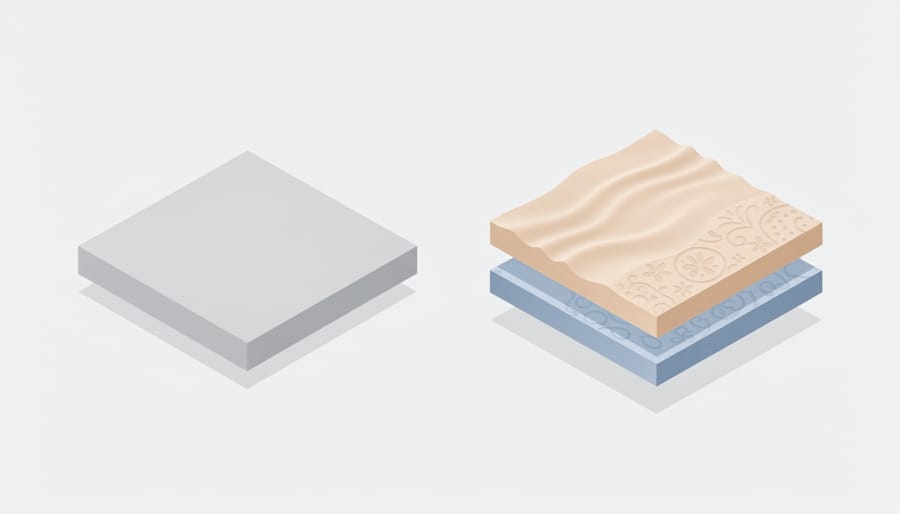
Not all prestige labels deliver equal value, and learning to separate genuine quality from clever marketing protects both your wallet and your skin. Start by examining ingredient lists with a critical eye. Truly innovative prestige brands invest in research-backed actives at effective concentrations, not just trendy buzzwords. Look for transparent formulations that list key ingredients prominently and explain why they’re included. If a luxury product’s ingredient list reads identical to a drugstore option but costs five times more, you’re likely paying for packaging and prestige positioning rather than superior performance.
Dermatologist recommended brands often signal real credibility, but dig deeper to confirm that endorsement translates to formulation quality for the specific product you’re considering. Check whether the company invests in clinical testing and publishes results, or whether their claims rely purely on marketing language. Authentic prestige companies back their products with transparency about testing protocols and ingredient sourcing.
Shade range tells you volumes about a company’s values and investment in innovation. Prestige brands worth your money offer inclusive ranges from launch, not as an afterthought. This demonstrates genuine formulation expertise, since creating shades that work across all skin tones requires sophisticated color science and quality pigments.
Watch for red flags that signal style over substance. Excessive emphasis on luxurious packaging with minimal information about the actual formula suggests misplaced priorities. Limited product information, vague ingredient sourcing, or resistance to transparency about manufacturing practices indicate you’re funding brand mystique rather than quality. Similarly, prestige companies that rely heavily on influencer hype without substantive education about their formulations may prioritize marketing budgets over research and development.
Customer service quality matters too. Prestige brands should offer knowledgeable support, generous return policies, and willingness to help you find the right products for your needs. If a company makes returning an expensive mistake difficult, they’re not confident in their product quality.
Making Prestige Beauty Work for Your Budget
You don’t need to choose between prestige quality and staying on budget. The smartest strategy is investing where formulation really matters and saving elsewhere.
Splurge strategically on foundation, luxury skincare brands with proven active ingredients, and complexion products that touch your skin all day. These categories genuinely benefit from prestige research and development. A well-formulated foundation wears better, looks more natural, and often contains skincare benefits that drugstore versions skip. Similarly, prestige serums and treatments typically feature higher concentrations of actives and more sophisticated delivery systems that justify the price difference.
Save confidently on mascara (even prestige mascara needs replacing every few months), eyeliner, and brow products where affordable options perform identically. The formulation gap has virtually closed for these categories. You’re mainly paying for packaging and prestige positioning, not superior results.
Access prestige brands smartly through holiday value sets, which offer full-size products at significant savings. Many prestige companies release these sets specifically to introduce customers to multiple products at a lower entry point. Shopping during major sales events and using birthday gifts from loyalty programs stretches your budget further.
Consider splitting your routine: a prestige cleanser and serum paired with an affordable moisturizer often delivers better results than an entirely mid-range routine. This targeted approach lets you experience genuine prestige innovation where it counts most while keeping your overall beauty budget manageable and realistic.
Understanding what makes a prestige cosmetics company worth your investment comes down to knowing your priorities and doing your homework. The prestige label can signal genuine innovation, superior formulations, and luxurious experiences, but it’s not a magic guarantee of quality. Some prestige brands deliver exceptional value through cutting-edge research and carefully sourced ingredients, while others rely heavily on packaging and marketing to justify their price tags.
You now have the tools to evaluate any prestige cosmetics company critically. Look beyond the beautiful counter displays and celebrity endorsements to assess what you’re actually getting for your money. Consider whether a product’s formulation, performance, and longevity justify the premium, or if a more affordable alternative meets your needs just as well.
The beauty of today’s market is that prestige doesn’t have to mean inaccessible. By shopping strategically, focusing on the categories where prestige truly delivers, and understanding the landscape of major players, you can build a collection that feels luxurious without breaking the bank. Remember, the most empowering beauty choice is the informed one that aligns with your unique values, skin concerns, and budget. You deserve products that work beautifully for you, regardless of their price point.